


The Ultimate Guide to Power Factor: What It Is and Why You Should Care

Electricity can sometimes feel like magic, but at its core, it’s just energy doing work. If you run a business, a factory, or even just look closely at your electric bill, you might have heard the term Power Factor.
But what exactly is it? Why do electrical engineers care so much about it? And more importantly, how does it affect your wallet?
Let’s break it down into plain English.
What is Power Factor? (The Beer Analogy)
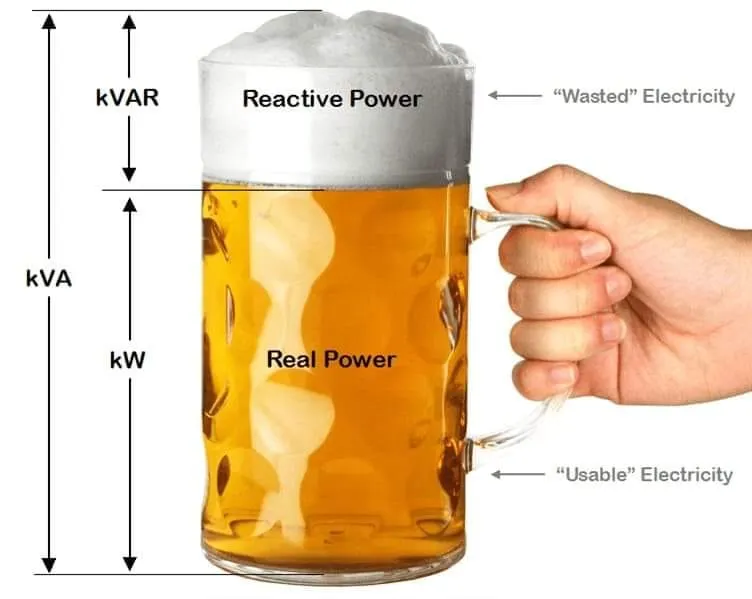
The easiest way to understand power factor is to imagine ordering a tall glass of beer.
When your drink arrives, the glass is full, but it’s not all liquid. You have:
- The Liquid (Real Power / kW): This is the actual beer that quenches your thirst. In electricity, this is the power that does the actual work—like lighting up a bulb or spinning a motor.
- The Foam (Reactive Power / kVAR): This takes up space in the glass, but it doesn’t do much for your thirst. In electricity, this power is needed to create magnetic fields in motors and transformers, but it doesn’t do the actual work.
- The Whole Glass (Apparent Power / kVA): This is the total amount of stuff in the glass (liquid + foam). This is what the power company actually has to generate and send through the power lines to your building.
Power Factor is simply the ratio of the liquid to the whole glass.
- A perfect power factor is 1.0 (all liquid, no foam).
- A poor power factor is something like 0.7 (lots of wasted space with foam).
The Wave Game: Lagging and Leading
To understand why we get that “foam,” we have to look at how AC (Alternating Current) electricity travels. It moves in waves. There is a Voltage wave (the pressure pushing the power) and a Current wave (the actual flow of electricity).
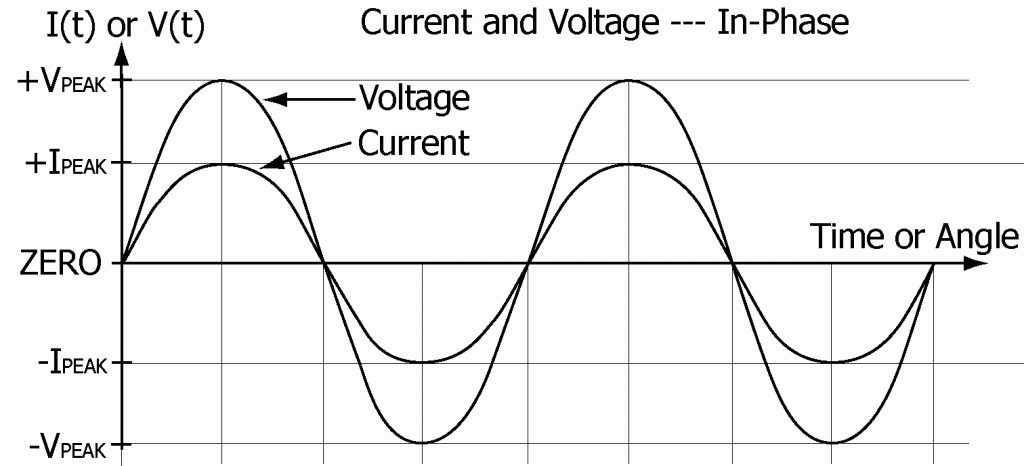
For perfect efficiency, these two waves should ride together in perfect harmony. But certain electrical equipment knocks them out of sync:
- Lagging Power Factor: This happens when the current wave lags behind the voltage wave. Think of pushing a heavy shopping cart; it takes a second of pushing (voltage) before the cart starts moving (current). This is incredibly common and is caused by “inductive” loads like electric motors, transformers, and refrigerators.
- Leading Power Factor: This happens when the current wave jumps ahead of the voltage wave. Think of a stretched rubber band pulling you forward. This is caused by “capacitive” loads (like power capacitors or certain electronic networks).
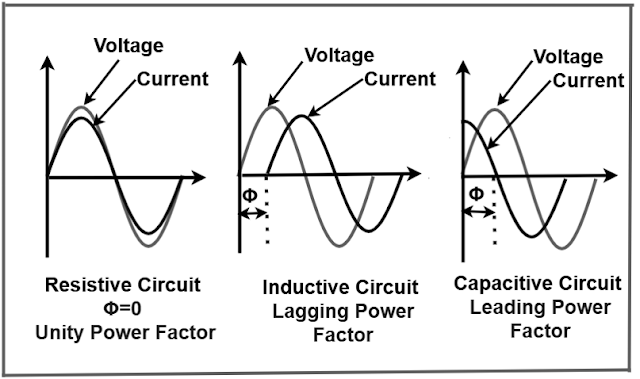
Most industrial and commercial buildings suffer from a lagging power factor because they use a lot of electric motors.
Why is Power Factor Important?
Power factor is the ultimate measure of electrical efficiency. It tells you how effectively you are using the electricity that is being supplied to you.
Power companies have to generate enough power to supply the entire glass (Apparent Power), even if you are only using the liquid (Real Power). If your power factor is poor, the power company has to push extra current through the grid just to get the same amount of useful work done.
The Hidden Costs: Effects of a Poor Power Factor
If your electrical system is full of “foam,” things start to go wrong:
- Expensive Penalty Fees: Power companies hate poor power factor because it stresses their grid. If your power factor drops below a certain level (usually around 0.85 or 0.90), they will slap you with hefty penalty charges on your monthly bill.
- Overheated Cables: More foam means more total current flowing through your wires. This extra current causes your cables and switchgear to overheat.
- Voltage Drops: Just like water pressure dropping when too many taps are open, a poor power factor can cause your voltage to drop, making your lights dim and your motors sluggish.
- Wasted Capacity: If your wires are filled with useless reactive power, you have no room left to add new machines or lights without having to pay for a massive electrical upgrade.
How to Fix It: Improving Your Power Factor
The good news is that a poor power factor is completely fixable! Because most bad power factors are “lagging” (caused by motors), we fix them by adding something “leading” to balance it out.
The most common solution is installing Power Factor Correction (PFC) Capacitors.
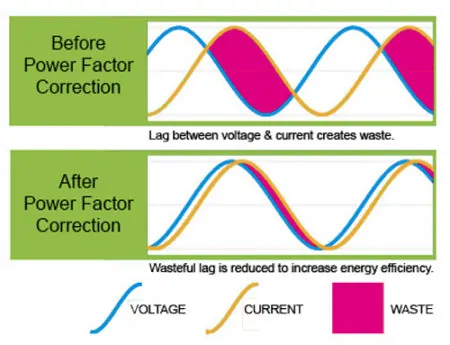
Think of these capacitors as little energy sponges that sit right next to your heavy machinery. Instead of the power company sending all that “foam” (reactive power) miles down the road through the power lines, the capacitors provide it locally. This keeps the power lines clear for the “liquid” (real power) that actually does the work.
The Payoff: Benefits of Improving Power Factor
Investing in power factor correction comes with some fantastic benefits for your facility:
- Lower Electricity Bills: By removing power company penalty fees, power factor correction equipment often pays for itself within 1 to 2 years.
- Cooler, Safer Equipment: Less current flowing through your wires means less heat, which reduces the risk of electrical fires.
- Longer Lifespan for Motors: Better voltage and less heat mean your expensive machinery won’t have to work as hard, extending its lifespan.
- Free Up Electrical Capacity: By clearing out the wasted power in your wires, you instantly free up space to add new machines or expand your facility without having to buy expensive new electrical panels or thicker cables.
Bottom Line
Your power factor is essentially your building’s electrical health score. Keeping it as close to 1.0 as possible saves you money, protects your equipment, and helps the power grid run smoothly.